Diabetes left the 64-year-old blind in one eye and forces her to undergo kidney dialysis three times a week.
She also has arthritis that keeps her confined to a wheelchair.
Despite all that, she still spends 10 hours a day at her computer, translating...
Sylliboy also fears a heart attack could kill her.
"I want to be able to meet my creator and tell him I did my share of promoting my language and my prayers and my spirituality with others," said Sylliboy.
Showing posts with label translation. Show all posts
Wednesday, November 05, 2014
BIBLE NEWS: Translating in the Face of Deadly Illness
Many Bible translators work under difficult conditions as they try to bring the gospel to remote and often hostile tribes. But some face difficulty in the comfort of their own homes. Helen Sylliboy is working to finish translating the Bible into Mi'kmaq (a language of the Native Americans of Canada) in the face of extreme health problems which threaten to end her life before her work is done.
Labels:
bible,
bible news,
health,
Mi'kmaq,
micmac,
news,
translation
Saturday, May 31, 2014
BIBLE NEWS: A New Bible Translation
We Bible Quizzers are no strangers to different Bible translations, especially in light of our recent switch from the New International Version (NIV1984) to the English Standard Version (ESV). So, it is interesting to see a new translation due to come out shortly based on the King James Version of the Bible, called the "Modern English Version" or MEV.
The KJV series works off of a different philosophy of translation than the NIV or ESV. Instead of focussing entirely on the original Greek, the MEV and other related translations look at the traditions which have grown up around the Bible, as well, especially in the English language. This can sometimes obscure the original meaning to a point, but also provides more poetic and smoother reading than literal translations.
And no, we have no plans to adopt this new version in Bible Quizzing or the EFCA in general.
The KJV series works off of a different philosophy of translation than the NIV or ESV. Instead of focussing entirely on the original Greek, the MEV and other related translations look at the traditions which have grown up around the Bible, as well, especially in the English language. This can sometimes obscure the original meaning to a point, but also provides more poetic and smoother reading than literal translations.
And no, we have no plans to adopt this new version in Bible Quizzing or the EFCA in general.
Labels:
bible,
bible news,
mev,
modern english version,
news,
translation
Saturday, May 17, 2014
BIBLE NEWS: The Bible in the Opo language
Jesus said to take the gospel to all nations, and one way that this is being done is by translating the Bible into every language in the world. Recently, the Anglican church passed a milestone by translating the gospel of Mark into "Opo", a people group from Gambella in South Sudan
The Opo desperately want the Bible in their own language. There is a team of three working on this project: the Rev. David Onuk is the only priest of the Opo, and recently attended a one month course on Bible translation in Addis Ababa. Rev. Isaac Pur Wal is a Nuer priest who helped with understanding the base text as they were translating from Nuer and inputting the translation into the computer. James Bol is an Opo who works for the Gambella government doing translation of documents into Opo.
Labels:
bible,
bible news,
biblenews,
gambella,
news,
opo,
translation,
translator
Monday, December 02, 2013
BIBLE NEWS: Bible More Accessible Than Anytime in History
It was not so long ago that you were a very lucky person if you had access to a Bible. For centuries, they were held almost exclusively by priests and monks. Then for centuries more, they were mostly held by the rich. By the time our parents and grandparents came along, Bibles were everywhere in the Western world, but still forbidden across most of the east. But now, experts are saying the Bible is accessible to nearly anyone, more-so than any time in history. And it may be fulfillment of prophecy!
Creson states that "the last translator for the last Bible translation is alive somewhere in the world today." He told CP why he believes that. "Thirty years ago, the average New Testament took over 20 years to translate," Creson explained. Today, it takes about 8 years.
The Wycliffe president also testified his belief that organization's work helps bring about the End Times. "I believe that the work we do hastens the return of Jesus Christ," Creson told CP. Citing Matthew 24:14, he paraphrased Jesus' words saying "this good news message has to be preached to the whole world, to every tongue, tribe, and nation, and then the end will come."
Labels:
bible news,
bibles,
history,
internet,
news,
project,
translation
Wednesday, July 31, 2013
Saturday, June 22, 2013
BIBLE NEWS: Wycliffe Develops a Sign Language Bible
Christians have worked hard to bring the gospel to the "Ends of the Earth" geographically, but there are still people groups who are unreached due to circumstances other than geography. For example, it is hard to hear the gospel if you are deaf. But Wycliffe is looking to change all of that. The Great Commission is being fulfilled in new and exciting ways!
"There is still no full translation of the Bible in any sign language," reports Wycliffe. Yet the Japan Deaf Evangel Mission (JDEM) aims to change that, creating the world's only full-text sign language Bible using video-recorded Scriptures.
According to JDEM, the mission of its ViBi project is to "translate the Hebrew and Greek Scriptures into Japanese Sign Language (JSL) and produce them on visual media, placing these Bible tapes for sale in bookstores throughout Japan."
Labels:
bible,
bible news,
deaf,
news,
sign language,
translation,
translator,
wycliffe
Monday, August 06, 2012
BIBLE NEWS: Controversial new Translation presents Bible as a Screenplay
Bible Quizzing is all about learning the Bible, and figuring out how it applies to your own life. But for some, it can be hard to apply historical narratives to daily life. A new translation called TheVoice is trying to change that by presenting scripture in the format of a screenplay.
Take the passage from Genesis in which God gets angry at Adam for eating the forbidden fruit from the tree of knowledge of good and evil:
“Adam (pointing at the woman): It was she! The woman You gave me as a companion put the fruit in my hands, and I ate it.
“God (to the woman): What have you done?
“Eve: It was the serpent! He tricked me, and I ate.”
Of course, this is not only creative but also highly controversial, since it can be argued that it is adding to God's word. (Note in the above that it shows Adam "pointing to the woman" which was not in the original text.) However, the authors point out this is not intended for in-depth study, but rather as a tool to help people engage with the stories of an ancient text. (For quizzing, we'll stick with a more established and reliable translation, I think.)
Labels:
bible,
bible news,
creative,
drama,
news,
screenplay,
translation
Monday, May 21, 2012
BIBLE NEWS: The Bible Comes to Inuktitut
After 34 years of work, the Bible has been translated into Inuktitut, a language of many Eskimo tribes. This project highlighted some of the unique challenges that translators face in lands very different from those where the Bible was written.
Plant and animal names were among the biggest difficulties and often the word "tree" was used for them. In some cases, English words such as "camel" were used. One surprising difficulty was the complete absence of a term for "peace" in Inuktitut. That forced the translators to use complete sentences to get the idea across to readers, according to Haaretz.
Monday, May 07, 2012
BIBLE NEWS: Translation is NOT easy
A few days back we mentioned that the Bible was not written in English - it's original writings were in Hebrew, Aramaic, and Greek. Thanks to scholars, we have a plethora of English translations which do their best to convey the original writings accurately. But what about people who speak less-popular languages? They often only have one translation provided by Missionaries like Wycliffe Bibe Translators. These languages may not have scholars who understand the ancient languages, and may not even have a starting point for discussion of things like "sheep" and "goats" depending on what part of the world they're in. So what is a Bible translator to do? Some recent controversies have highlighted the difficulty that Bible Translators have walking the line between making the Bible understandable to a foreign culture and language, and maintaining the theology taught by Christ.
Creson said that in some cases, what are known to scholars as the "divine familial terms" -- God the Father and the Son of God -- don't make sense in translation in some cultures. Islamic teaching, for example, rejects the notion that God could be involved in a relationship similar to a human family, and Creson argues that people in such cultures might be immediately put off by those terms.Be praying for Bible translators. The job may seem straightforward - exchanging words for other words - but all too often, it is walking a minefield without a map.

"Translation is a very laborious process, because you have to understand the culture of the community, and you don't understand that overnight," he said.
But using words like "Messiah" instead of "Son" and "Lord" instead of "Father" badly distorts the essential Christian doctrine of the Trinity, in which God is said to be one being in three persons, according to Wycliffe's critics.
Labels:
bible,
biblenews,
controversy,
translation,
wycliffe
Tuesday, May 24, 2011
Bible translated into Native Alaskan language
Bible translators like Wycliffe are looking to bring the Bible to every language in the world. One of the newest examples is Gwich'in, a language of native Alaskans, which now has it's own Bible to let the gospel reach a whole new people-group.
The gold-lettered title of the plain-covered book reads "Vit'eegwijyahchy'aa: Vagwandak Nizii," Gwich'in for, "God: His Good News."
...Since then, a new Gwich'in spelling/writing system was created by Wycliffe translators Richard and Susan Mueller, who started working on translating the New Testament into the new format more than 50 years ago.
Tuesday, May 17, 2011
Who DOESN'T have the Bible?
We English-speakers have an embarrassment of riches when it comes to quality Bible translations. We have so many, in fact, that we can take the time to debate the relative merits of the different versions (NIV, ESV, RSV, KJV, etc.) But for many peoples, they don't even one book of the Bible in their own language. That's why it is so important to have Bible translators working to empower missionaries and local pastors to preach in their own tongues.
The need is about 340 million people speaking 2,078 languages, to be exact. These hundreds of millions of people don't even have Bible translation programs started in their languages, according to Wycliffe Bible Translators.
That's why Andrew Lancaster*, who has a degree in Bible translation and is headed to serve overseas, has a passion to see the need met.
"Why is it that there are now hundreds of English translations of the Bible, yet more than 2,000 languages of the world do not even have one word of it? English versions are produced left and right while thousands are dying without having ever had access to the Word of God," Lancaster said.
Saturday, July 24, 2010
Wycliffe is bringing the Bible to ALL LANGUAGES by 2025
Have you ever stopped to think about how many different languages are spoken in the world? Experts believe there are 6,905! And Bible translators like those at Wycliffe believe that it will be possible to translate the Bible into all of those languages by 2025! Jesus gave us the command to bring his gospel to all nations, and it may be within our lifetime that fulfilling that charge may be possible!
Wycliffe Bible Translators, the world’s largest scripture translation organization, believes Bible translation into all of the remaining 2,200 languages used by some 350 million people is possible by 2025...Keep a close eye on these developments, as we may be approaching a turning point in history. Once every man, woman, and child in the world can hear the gospel, who knows what may change?
Edwards said many factors are contributing to the rapid speed of Bible translation over the past few years.
As recent as 1999, Wycliffe estimated it would take eight generations, or some 140 to 150 years, before it would see the last translation started. In 1999, the group was averaging 20 new translation starts a year and there were about 3,000 languages left.
But 10 years later, Wycliffe had 109 new translation starts in 2009. The average new translation starts for the past 10 years is 75, Edwards noted.
Tuesday, July 28, 2009
Exhibit of early New World Bibles
In school, much is made of secular reasons for the European exploration of the new world. They came for gold, silver, land, political freedom, etc. But we often forget how many came hoping to evangelize the native peoples. A new exhibit in Notre Dame collects together many of the first Bibles produced in the New World. Most of them were aimed at providing the Bible to Native Americans in some approximation of their own language.
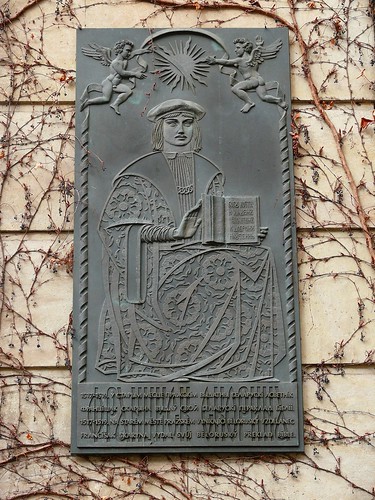
The first Scripture translated in America was the Nahuatl (or Aztec) Lectionary prepared by Bernardino de SahagĂșn in 1532, just a few years after the arrival of Cortes in Mexico. The manuscript of this work disappeared after the death of its author and was recovered and published only in 1858. In the British colonies of North America, Scripture translation began with the spectacular achievement of John Eliot, who crafted a complete version of the Bible in the language of the Massachusetts Indians and had it printed in Cambridge in 1663. Bible translation in America came to a halt after Eliot's Indian Bible and was resumed only in the nineteenth century by the British and Foreign Bible Society and the American Bible Society. The BFBS was founded in 1804 and its first publication, issued before the end of the year, was a translation of John's Gospel in Mohawk. For Latin America, the first BFBS Scripture was Luke in Aymara, issued in 1829, while the first ABS Scripture was the book of Acts in Arawak, completed in 1850.
Labels:
american,
history,
indians,
nativeamericans,
translation
Monday, July 27, 2009
"Find a Bible"
It is easy to find an English Bible. We have many translations, paraphrases, interlinears, etc. In fact, we have so many different kinds of Bibles that for Quizzing, we have to specify the exact translation to use (NIV, not TNIV or ESV or KJV). But that is not the case for many others whose language is not one of the majority. So, what do you do if your first language is not English, and you can't read 1st-century Greek? The Forum of Bible Agencies has introduced "Find a Bible", a new interactive website for locating translations and resources (online or otherwise) for virtually any language the translators have gotten to. Click on over and check it out. It is amazing to see just how many languages it covers for the USA alone!
Wednesday, June 17, 2009
A Collection of Historic Bibles on Display
We love the many translations available to the modern reader of the Bible. But have you ever thought about the trials and tribulations that others have gone through to produce Bibles in languages that locals can read? One man has a traveling display of historic Bibles translated into various languages.
"People have taken the Bible for granted because they've always had one or can easily get one if it is lost. Because of its availability we've lost a sense of its importance," he said. "That's what prompted me to gather this collection."
Among the Bibles to be displayed at the SBC exhibit:
-- A Latin Vulgate that was handwritten on vellum around A.D. 1230 and served as the basis for John Wycliffe's translation.
-- The last of five editions of Erasmus' Greek New Testament, printed in A.D. 1535.
-- William Tyndale's New Testament dated 1552 which served as the basis for all subsequent English versions for the next 400 years. Many of these were confiscated and burned...
Monday, May 11, 2009
The Taliban Fears the Bible
The Bible is known to be a powerful book. It has freed prisoners, it has brought down tyrants, and it has raised up great leaders. Its enemies know this, and fear it. The Taliban in Aghanistan is now decrying local-language Bibles that are appearing in the country. They are accusing American soldiers of distributing them.
Afghanistan's Taliban have urged Afghan Muslims to resist anyone trying to convert them, after a television network aired pictures of U.S. soldiers in the country with bibles translated into local languages.This is one of the reasons why we learn and memorize scripture in Bible Quizzing. People can ban paper and electronic Bibles, but they can't stop you from bringing memorized scripture with you wherever you go.
Qatar-based Al Jazeera television showed footage on Monday of a bible studies class on a U.S. base in Afghanistan where a soldier had brought a stack of bibles translated into the Afghan languages Dari and Pashto.
Tuesday, September 16, 2008
Translating the Bible INTO Hebrew?!
It is a common thing to hear about Wyliffe Bible Translators and others looking to publish an edition of the Bible in a new language, starting with the original Hebrew and Greek manuscripts. But how often do you hear about a plan to translate the Hebrew Bible into Hebrew? The idea is that modern Hebrew and ancient Hebrew are significantly different, and that modern students need a version which is closer to what they speak in Israel these days. I guess it is like trying to "translate" Shakespeare into modern English.
"The language of the Bible is a 'foreign language' for Israeli students, and there is a need to interpose easier language, so that teachers can have free time to delve deeper [into the material]," said Rafi Mozes (who decided to etch his name on the project for posterity and thus titled the book the Ram Bible, where "Ram" represents his initials in Hebrew). Avraham Ahuvia, who translated the work, added: "I was convinced [to put out the book] because we teachers translate the Bible orally in lessons for the students, who have a difficult time understanding the grand language."The real problem here is that the "translators" chose to change the meaning of key verses of scripture while making it more readable to moderns. It is often hard to do a translation without accidentally or purposely slanting the new version with your own ideas and preconceptions.
Monday, July 21, 2008
Wycliffe speaks "Pijin"?
Besides the major languages of the world, there are a number of so-called "pidin" languages in the world. Mostly located in colonial situations (where a major culture conquers a lesser one through war or economic means) these languages are combinations of a major language (like English or French) and local languages. Sometimes they sound very much like the major language, but an outsider would have a hard time figuring it out. Now, Wycliffe Bible Translators is producing Bibles in these pijin languages, so that God's truth can truly be heard in every tongue.
And Andrew VanAndel, a Canadian with a BA in linguistics, stated, "I enjoy learning new languages ‘an distaem mi save staka abaotim Pijin’.”
Jen Quist, another Canadian said: "My favorite part of the Pijin launch was when they said that now God speaks Pijin."
The team plans to hold another SALT course on Santa Cruz Island following the 20 July launch of the Natqgu NT, Psalms and Ruth.
Then they will join with Natqgu Language Project members for distribution tours around Santa Cruz Island.
Subscribe to:
Posts (Atom)


PHOTO OF THE WEEK: Monument to a Bible Translator